Finding the right balance between work and daily life is the challenge of all the workers of our century, in particular of the new generations who are sensitive on the one hand to sustainability issues, on the other hand to work for non-totalizing companies, which leave, even with smartworking, enough space to privacy. A real revolution, compared to the vision of previous generations. The ability and possibility to successfully reconcile work, family commitments and personal life is defined as a work-life balance, which has now been scientifically proven to be essential for everyone's well-being.
In fact, there is evidence that very long working hours can damage personal health, compromise safety and increase stress.
According to the latest OECD (Organization for Economic Cooperation and Development) data, it appears that Greece, Estonia, Portugal and Italy are the countries of the European area where people work the most hours a week. In Switzerland, the percentage of employees working very long hours is 0.4%, much lower than the OECD average of 37 member countries to date. Switzerland is also one of the countries with a lower unemployment rate than other European countries. At the end of 2019, unemployment was around 2.5%, while in the European Union it was 6.2%.
The work-life balance is a frontier that does not only concern workers, but also for companies that want to improve their results. In fact, an increasing number of companies are launching an organizational model that aims to promote work well-being through actions and projects aimed at making employees not only happier, but also more productive.
A STATE-OF-THE-ART EVOLUTION
At the end of the 1800s the working day averaged sixteen hours, in a continuous sleep-work cycle. About a century later, a law was passed in 1902 that set a maximum working day of 12 hours for women and young people up to 15 years of age.
And it is only thanks to the Royal Decree n. 692 of 1923, which extended the model of the maximum eight hours per day and forty-eight per week to all categories.
Many years have passed since then and the needs of the workers themselves have changed. Especially the new generations are increasingly looking for flexible hours or alternative forms of professional services such as job-sharing or teleworking.
From the 2018 edition of the Randstad Employer Brand it became clear that the work-life balance is of greater importance than a high salary and advantageous benefits for more than half of the workers or aspiring workers.
It is therefore essential for all companies wishing to keep up with the times to ask themselves how it is possible to combine the professional commitment and personal needs of their employees; this not only to meet the needs of the latter but also to increase company productivity.
As discussed in the article " The benefits of a healthy work environment" there are many advantages for companies that invest in the well-being of their employees.
As stated by the head of communication Anna Zavaritt of Valore D, the first association of large companies created in Italy to support female leadership in the company, to better manage a company it is necessary to take into account the needs of the various resources, mapping the needs of its employees and collecting their suggestions on how to improve work processes. In fact, Zavaritt affirms that: "The main objective of a company should be to dialogue with employees, verify what their real needs and expectations are and build effective responses together".
THE BENEFITS FOR COMPANIES
- Flexible working hours allow to better organize private life, help to create a peaceful business climate and make employees' work more efficient. In this way, not only is a virtuous circle of well-being, motivation and performance generated, but it shows greater closeness to collaborators who feel valued.
- Smart Working, strongly taken into consideration by companies during the Covid-19 emergency, has a positive influence especially on the private life of employees and implies significant savings for the employer.
According to the study by the Smart Working Observatory, the advantages that can be obtained from the introduction of this working formula are:
- The improvement in productivity: an increase in productivity of 15% is estimated, in Italy it is estimated at around 13.7 billion euros.
- Reduction of absenteeism.
- Reduction of costs for physical spaces.
- Measurable benefits for the environment.
- Welfare and Benefits promote greater productivity and motivation in the workplace. This is certified by a research made by the international management consulting firm McKinsey & Company. The study showed how policies aimed at employee wellbeing, make it possible to reduce absences and illnesses by up to 15% with annual savings of approximately 1,350 euros per employee. In addition, they allow you to better plan your working days, increase productivity by about 5% and decrease the months of maternity leave with the respective recovery of 1,200 euros per worker.
- Corporate Training plays an essential role in increasing the technical and soft skills of employees, increases motivation and improves the quality and performance of work.
- Transparent career opportunities regulate professional life: in this way the employer is able to better evaluate the work of employees and better communicate appreciation and criticism.
- Better performance directly resulting from a decrease in stress and a more creative and stimulating work environment. Everyone is called upon to manage their work in an increasingly autonomous way, while ensuring the achievement of professional goals.
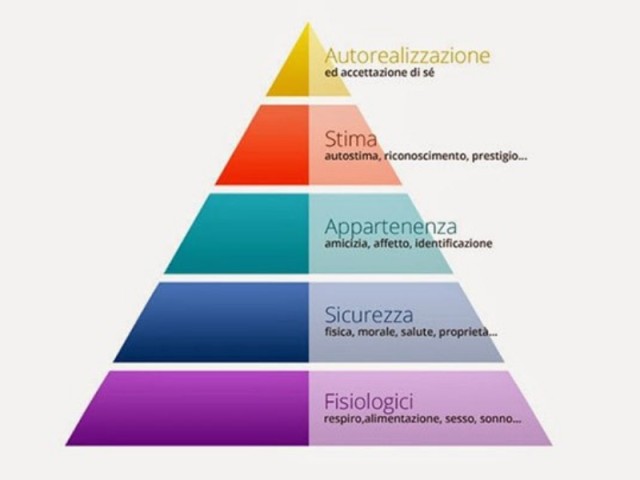
- A positive company climate increases the sense of belonging, binding the worker in the long term respecting the company values. Furthermore, enhancing the work-life balance means demonstrating trust, an essential component for retaining talent, improving retention rates and increasing motivation.
Work, therefore, must not stifle private life, and private life must not be an obstacle to work: a good career is built on balance. A successful company is based on the teamwork of its employees who evolve over time and needs. Success, therefore, follows in evolving with them.