Quantasia SA - Coaching and Corporate Training

Whether you hold the position of CEO or CFO, HR manager or whether you are an entrepreneur, if you are looking to orient yourself in the modern world of corporate welfare, follow me in reading this article. I will try to provide you with useful information that will allow you to start implementing a welfare plan for your company.

Corporate welfare and benefits to motivate employees are becoming popular, but why has the need to create real welfare plans arisen in companies in recent years? How does corporate welfare work and how to concretely implement welfare plans?

The reason why there is a need to provide welfare today is due to the disruption of the world of work: technology has transformed the way companies and people work, changing the pace of work and energy expenditure (such as high levels of concentration, preparation, specialization …). People have changed compared to decades ago. Nowadays people are more educated, informed and aware. We are inevitably faced with a society that has changed its needs, requirements and expectations: people have now the desire to live a more comfortable and satisfying life to compensate for the demand for time, energy and thoughts that they devote continuously to their own company during the working day.


Welfare therefore means taking a step in the direction of your collaborators with investments aimed at their well-being and comfort. Welfare is not a purely organizational, managerial or economic aspect of tax breaks, but it is the employer’s awareness of being faced with a new company, a new working era.

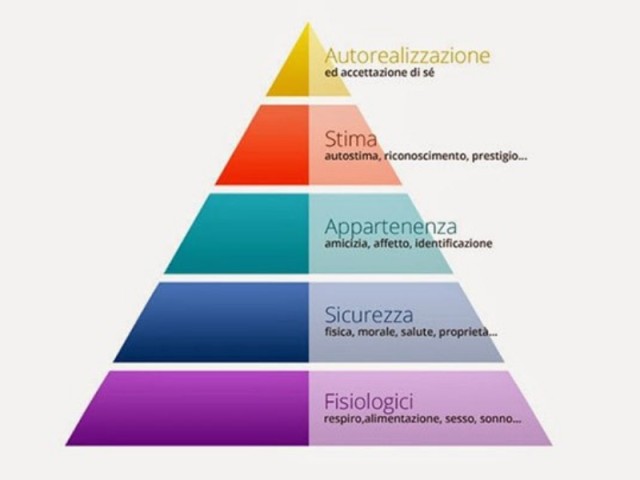
Companies are called upon to review and rethink how to incentivize, gratify and enhance their resources so that they choose to engage in favour of the mission by providing motivation, ideas, creativity and will in the act of participating in the corporate mission. In addition to having been confirmed by multiple studies, we also know how much the satisfaction and sense of belonging of the collaborators give a considerable pay-back in terms of greater commitment, dedication, positivism, productivity and performance.

Corporate welfare therefore helps companies to become aware, organized and proactive in implementing solutions that engage, support and reward their resources and these, thanks to the incentives, feel part of a real system that revolves around their lives.

The benefits of corporate welfare

The corporate welfare plan is a tool that aims to concretely support the daily life of employees and therefore should be tailor-made according to their needs and characteristics. A good welfare plan should in fact allow you to support your collaborators with advantages and benefits that can be spent in many forms and in different situations.

Thanks to the integration of income in other forms, corporate welfare allows you to obtain tax benefits related to the deductibility of costs incurred for the implementation of the plan. Therefore, there are advantages for both parties: the resource will have concrete support and incentives that can be spent in his private or professional sphere, while the company will be able to contain costs and retain collaborators in a diversified way, inevitably increasing the reputation.

Increasing productivity and retaining resources are among the most important business objectives. You can learn more about this topic by reading the article “Corporate welfare: motivation of resources and benefits for businesses!

What you need to know to build a personalized welfare plan

Corporate welfare is the set of incentives that the employer offers to its employees. It represents the set of goods and services selected by the company to meet the daily needs of employees and their families.

The first action to take is to develop a welfare plan based on the specificities of your collaborators. You could carry out a survey to probe their needs, their shortcomings and their desires; this would allow you to build an ad hoc welfare plan for your company. There are no rigid and pre-established plans, but a welfare plan must be thought out, built and customized with care. Many companies, for example, choose to create a welfare plan for homogeneous categories of employees (of equal level of authority or job) or plans for different categories of employees. In both cases, you will have to decide whether to give your resources the opportunity to choose to receive either incentives or prizes in pay checks or the equivalent in welfare goods and services. Your choice will depend on the type of approach you wish to implement in your company.


Welfare “on top” or based on reward: this is the welfare solution applied to homogeneous categories of workers. It provides the offer of goods and services to collaborators made unilaterally by the company and without the involvement of any employee representatives. This type of welfare plan can only be used in goods and services without any possibility of monetizing the value of the incentive. This welfare plan is also called reward welfare because it can be correlated with company objectives.

Contract welfare: It usually concerns the simpler solutions made mandatory by contracts and sector categories, these also include Flexible Benefits.

Claudia Vece

Founder of Quantasia SA, Claudia is a leading expert in developing strategies that integrate human capital development with organizational growth. Her career spans roles as CEO of international companies and strategic advisor to corporate boards, giving her extensive expertise in leadership dynamics and change management.

Other articles

Case Studies

Success stories in business coaching and organizational development.

Stay up to date with Quantasia insights

Receive updates on projects, events, and initiatives focused on organizational development and business growth.

Coaching is not therapy.

Coaching is a collaborative and goal-oriented process designed to support personal and professional growth. The Coach acts as a facilitator, helping clients develop clarity, awareness, and effective decision-making skills through observation, dialogue, and accountability. Coaching focuses on the present and future rather than exploring the client’s past in search of the causes of a problem. The Coach does not diagnose, interpret, or make clinical assumptions. A Coach is not a therapist, physician, or psychologist. If you are experiencing symptoms, emotional distress, or medical conditions, you are encouraged to consult a qualified healthcare professional or mental health specialist. Any information provided on this website, including references to health, wellness, or scientific topics, is intended solely for educational and informational purposes. It is not intended to diagnose, treat, cure, or prevent any medical or psychological condition, nor should it be considered a substitute for professional medical or psychological advice, diagnosis, or treatment. No content on this website should be interpreted as medical, psychological, or therapeutic guidance. Certain terms may occasionally be used in a general or conventional sense and do not imply medical, clinical, or psychological qualifications. Coaching services are not reimbursable through health insurance. Clients are informed of the distinctions between coaching and psychological or therapeutic support before beginning a coaching relationship.
Coaching is not reimbursable by health insurance. Clients are informed of the differences between a Coach and a psychologist.

Cookie bar

We use cookies and other tracking technologies to improve your experience and to analyze the traffic of our website.

For more information, please see our Privacy Policy.

By clicking on "Accept" you consent to the collection of data.

You can change your cookie settings at any time cookie settings and refuse them, except those strictly necessary.


Functional
Preferences
Statistics
Marketing