Find out how adults learn and how to promote team spirit in your organization.
Malcom Knowles, a world-renowned American educator, introduced the term andragogy to describe adult education and learning, as opposed to the pedagogy of children. As early as the 1970s, Knowles highlighted that the way adults learn differs from that of children, since adults must be motivated by an interest in analysing and understanding what they study to better organize information within themselves.
The difference between children and adults in learning new knowledge and skills
Learning for a child is a process of continuous discovery. Throughout childhood, the child captures elements from the environment, taking advantage of every opportunity to learn and grow; when unfiltered, this act is marked by trust.
The adult, guided by a sense of responsibility for their own actions, must sort and organize information, giving personal meaning to what they learn. In today’s complex society, where the volume of information far exceeds the learning capacity of a single individual, adults are called to choose what and how they want to learn.
Unlike the child’s confident learning, adult learning is selective and self-directed: (i) they learn what they want to learn; (ii) they learn if something is useful and meaningful; (iii) they draw on existing knowledge; (iv) they take responsibility for their own learning; (v) they learn only partially if the topic lacks interest, purpose or meaning, often forgetting the notions acquired.
Why are some employees not motivated to train?
Adults, although they wish to decide for themselves, are sometimes required to let others decide for them — as happens with corporate training courses imposed by HR or management. However, employees retain the right to resist or disengage if they are not satisfied. In other words, adults’ attitudes toward training can often be ambiguous and contradictory.
Many employees attend company courses not because they want to, but because they are required to. Scepticism toward continuous training is often influenced by personal experiences with learning and schooling, which inevitably affect both learning and non-learning behaviours.
Some employees experience corporate training as being forced back to school — a potentially humiliating experience if associated with the idea of not being good enough at what they do.
This is why employees are often sceptical of corporate training programs proposed by HR or management, asking themselves: “Why do they want me to learn this? What do I need it for? How does it fit into my professional path?”
How to motivate employees to participate actively in corporate training
HR departments should take resistance to learning into account and use an awareness-based approach to training that helps employees develop genuine interest in professional and lifelong learning. One of the most effective motivational levers is to involve managers or team leaders in promoting the value of training.
“Fostering team spirit will lead to building harmony and unity within the organization.”
Henry Fayol, 19th-century American entrepreneur.
To inspire employees to enjoy learning, the company can encourage a corporate culture that places people and their skills at the centre and supports their professional growth. This process takes time but yields significant results in terms of cohesion, belonging, and team motivation.
Another key factor is the choice of trainer who will guide employees in developing their skills. A trainer capable of conveying the pleasure of learning can profoundly influence a person’s approach to personal and professional growth.
The pleasure of learning is central to the learning process and is transmitted through interaction and emotion. Adult learning is primarily a social process (Lave & Wenger, 1991; Gergen, 1994): emotional engagement and social interaction are essential elements for adults in a learning environment.
The Quantasia method for inspiring the desire to learn
Quantasia SA in Lugano, Ticino, is specialized in coaching and training focused on personal and professional development through the teaching of transversal and neuro-emotional skills.
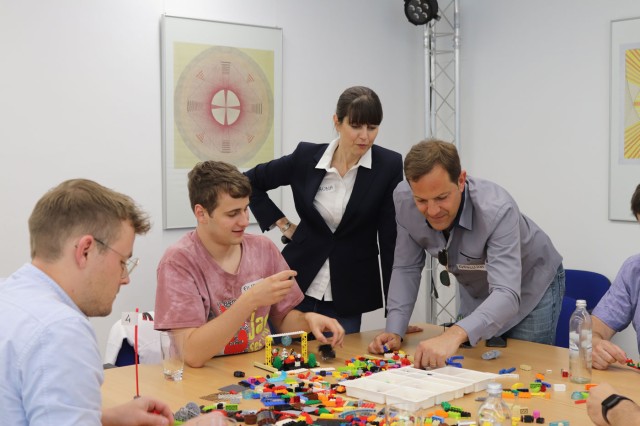
In our classrooms, employees are actively involved in the learning process through practical activities, exchange, and peer discussion. This approach is engaging, generates awareness, and stimulates curiosity. When an employee rediscovers the desire and curiosity to learn, we know we have done our job well — because from that moment, they will be motivated to continue learning, attend more courses, and invest in their personal growth.