This assessment is a simple and intuitive team development model that describes the different stages work groups go through, diagnoses which stage a team is in and what level of psychological safety people are experiencing, and suggests concrete dynamics and actions to increase cohesion and trust.
This team assessment offers a clear conceptual base, an objective diagnosis and a visual representation of the team’s state, together with a set of dynamics designed to work on relationships and on the communication spaces every group needs in order to function at its best.
It is not a simple climate survey: it is an experiential process that makes the team’s real dynamics visible and helps people create safe, collaborative and mature work environments.
What the assessment measures
- The level of perceived psychological safety in the team: how free people feel to speak up, ask questions, disagree or take interpersonal risks without fear of negative consequences.
- The team’s stage of development, distinguishing highly productive phases from more critical or potentially destructive ones.
- The degree of trust, cohesion and collaboration among team members.
- The quality of communication spaces: what is talked about, what is not, and how tensions, mistakes and difficult decisions are addressed.
- Relational dynamics that support or hinder learning, innovation and the team’s capacity to face challenges.
- Relational risk areas that, if not managed, can undermine motivation, well-being and performance.
How it works
Individual questionnaire
Each team member completes an individual questionnaire exploring their perception of psychological safety, relationship quality and how the team deals with different situations (successes, mistakes, conflicts, changes).
Visual report and team map
The results are compiled into a report that explains the role of psychological safety and trust in team development and presents a clear map of the group’s current stage. The report describes what is observed in the team and suggests intervention directions and focal points.
Workshop for debrief and dialogue
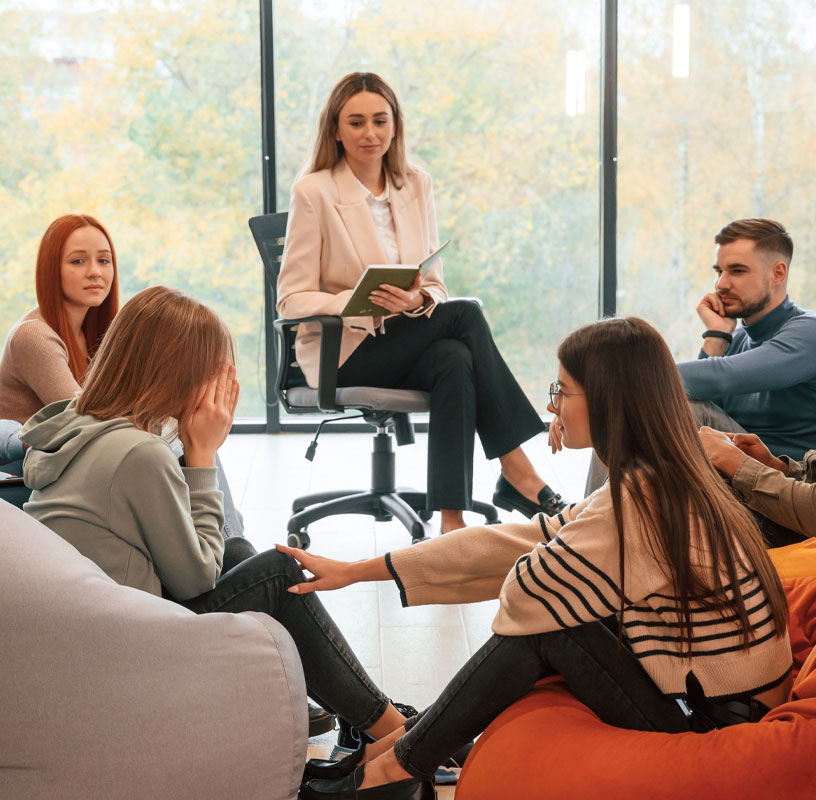
In a facilitated session, the team explores the results together, activates structured conversations and opens safe spaces for dialogue. This makes it possible to name what is really happening, address relational knots and define concrete steps to increase trust and collaboration.
Dynamics and action plans
Based on the diagnosis, specific dynamics are proposed for the team’s current stage. The group co-creates commitments and operational agreements that make the desired changes tangible and support evolution over time.
Follow-up and measuring progress
The assessment can be repeated after a set period to measure real team evolution and verify the impact of the work carried out.
When the assessment is useful
- For leadership teams or executive committees that want to increase cohesion, trust and the ability to hold difficult conversations.
- During organisational change, growth or restructuring, when the team is under pressure.
- In groups experiencing tensions, silence, latent conflicts or performance drops linked to relationships.
- In team coaching journeys focused on psychological safety and shared responsibility.
- When there is a desire to move from a group of professionals to a real team, able to support each other and learn together.
When it is not recommended
- When there is no real willingness to engage in open confrontation and to question relational habits.
- When the organisation is not ready to sustain an authentic and ongoing dialogue about team dynamics.
- If the aim is only a quantitative measurement or numeric report, without the intention of beginning a transformative process.
The strategic value of conscious leadership
This team assessment helps organisations create the communication spaces every team needs to develop and reach group excellence. Working on psychological safety means strengthening trust, learning and innovation capacity.
The assessment turns the team into a more conscious community, able to tackle complex challenges through authentic relationships, open dialogue and shared commitments. It is a strategic lever for building collaborative cultures and sustaining performance over time.