Executive summary
In organizations, decision-making inefficiencies represent an often underestimated cost, as their consequences extend beyond operational delays to include the inefficient use of management time, slower project execution, difficulties in cross-functional coordination and a gradual reduction in autonomy.
When a decision requires multiple approval stages, involves unclear responsibilities or is repeatedly escalated to senior leadership, the problem does not necessarily lie in the capabilities of the people involved. It may reflect an organizational system that prevents the effective use of the knowledge and capabilities already available within the company.
Understanding decision-making processes therefore means examining how strategy, governance, responsibilities, processes and managerial behaviors interact in everyday organizational activities.
Improving decision-making is not simply about accelerating approvals or introducing new procedures. It requires establishing organizational conditions that enable people to make appropriate decisions, collaborate across functions and take accountability for results.
When making a decision becomes more complex than the problem itself
In many companies, a significant proportion of managerial work is absorbed by the need to coordinate decisions involving multiple functions, hierarchical levels and areas of responsibility.
A commercial request that requires a change in operational priorities, an investment involving several departments or a cross-functional project can develop into a complex decision-making process, even when the necessary information is available and the people involved have the expertise required to evaluate the alternatives.
Difficulties arise when there is insufficient clarity about who should make the final decision, which functions should contribute and which criteria should guide the management of competing priorities.
In these situations, decisions tend to be postponed, escalated to other organizational levels or addressed through additional meetings and reviews. As a result, management devotes an increasing proportion of its time to managing interdependencies rather than focusing on activities with greater strategic value.
The problem is not necessarily a lack of collaboration. Often, each function acts consistently with its own objectives and assigned responsibilities, but the organization lacks a system capable of integrating these different perspectives into a shared organizational decision.
When the decision-making process becomes more complex than the decision itself, it is necessary to examine not only the efficiency of individual steps, but also the coherence of the organizational system that determines them.
The hidden cost of decision-making inefficiencies
Companies are generally accustomed to monitoring operating costs, productivity, margins and financial performance. Quantifying the costs generated by slow decisions, overlapping responsibilities and continuous realignment between functions is considerably more difficult.
These inefficiencies do not always produce an immediately identifiable cost item, but they can affect several dimensions of organizational performance.
- Management time absorbed by decision-making. When decisions require repeated approvals or are continually escalated to senior leadership, managers and executives devote resources to matters that could be handled at different organizational levels.
- Slower strategy execution. Projects and strategic initiatives may experience delays because the decisions required for their implementation are not made within the necessary timeframes.
- Duplication and unnecessary activities. Without clear responsibilities and decision-making criteria, several functions may carry out similar reviews or repeatedly intervene on the same issues.
- Reduced managerial autonomy. When decisions are systematically centralized, managers may become increasingly dependent on senior leadership, even in areas where they possess the capabilities required to act independently.
- Difficulties in collaboration. The absence of shared mechanisms for managing priorities and interdependencies can create tensions between functions and undermine coordination quality.
Beyond these effects, there is another consequence that is less immediately visible but particularly significant: the risk of failing to fully leverage people’s potential.
An organization may have experienced managers, skilled professionals and teams capable of identifying solutions, yet continue to operate below its potential if its decision-making system does not enable them to contribute effectively.
For this reason, the cost of decision-making inefficiencies should be assessed not only in terms of lost time, but also in terms of organizational capability that remains underutilized.
Why decisions become stalled even in organizations with competent people
When a decision-making process does not work effectively, the most immediate explanation often focuses on individuals: managers who lack autonomy, functions that fail to collaborate or leaders who struggle to take accountability.
These interpretations may capture certain aspects of the problem, but they risk overlooking the organizational conditions that influence behavior.
A manager may avoid making a decision because their mandate is insufficiently clear or because decisions previously made independently were subsequently challenged.
Two functions may repeatedly come into conflict not because they are unwilling to engage in constructive dialogue, but because their performance is assessed against objectives that reflect different priorities.
An executive may express the intention to develop greater managerial autonomy while continuing to intervene directly in operational decisions, making a genuine distribution of responsibilities difficult.
These examples illustrate how managerial behaviors are closely connected to the organizational system in which they develop.
Understanding the causes of decision-making inefficiencies therefore requires examining three interdependent dimensions.
- The first concerns governance, including the distribution of decision-making authority, responsibilities and coordination mechanisms.
- The second concerns strategic alignment, which enables different functions to evaluate alternatives based on shared priorities and criteria.
- The third concerns leadership and collaboration practices, through which managers and teams address disagreements, manage interdependencies and take responsibility.
Addressing only one of these dimensions without considering the others may produce temporary improvements without resolving the underlying causes.
For example, a formally well-designed decision-making process may continue to generate inefficiencies if people do not share the same objectives or if managers lack the autonomy required to exercise their assigned responsibilities.
Improving decision-making processes does not mean adding more procedures
When recurring difficulties emerge, a common response is to introduce new procedures, additional approval stages or more detailed control mechanisms.
In certain contexts, particularly where compliance, risk management or the coordination of complex activities is concerned, such measures may be necessary.
However, greater formalization does not automatically lead to better decisions.
If responsibilities remain ambiguous, objectives are not aligned or functions lack shared criteria for managing priorities, introducing additional rules may increase complexity without improving effectiveness.
The starting point should be an understanding of how the organization actually operates.
It is necessary to analyze where decisions slow down, which steps create value and which instead represent obstacles, how different functions are involved and which responsibilities remain unclear.
This analysis cannot be limited to reviewing organizational charts, procedures and internal documentation. It also requires direct engagement with the people who participate in decision-making processes every day and understand their operational challenges.
The expertise required to identify many of these problems is often already available within the company, but distributed across roles and functions that observe the system from different perspectives.
Creating structured opportunities for dialogue makes it possible to bring these perspectives together, understand interdependencies and identify solutions that better reflect organizational realities.
The objective is not to eliminate structure, but to establish decision-making mechanisms that are sufficiently clear to support autonomy, coordination and accountability without introducing unnecessary complexity.
How to make decision-making processes more effective
Improving decision-making requires an approach that integrates organizational analysis, clarification of responsibilities and management involvement.
The first step is to identify the decisions that have the greatest impact on performance, distinguishing strategic decisions from operational ones and identifying where delays, escalations or overlapping responsibilities occur.
The next step is to understand the causes of these difficulties by involving the relevant functions and reconstructing how decisions are actually made.
Bringing together different perspectives is particularly important when challenges concern cross-functional processes. In these cases, no single function has a complete understanding of the problem, and an effective solution requires a clear view of the interdependencies involved.
Once the critical issues have been identified, the work can focus on redesigning decision-making mechanisms by clarifying responsibilities, levels of autonomy, criteria for involvement and approaches to managing disagreements.
This phase must be accompanied by the development of the managerial capabilities required to put the new responsibilities into practice. The ability to make decisions, manage priorities and engage constructively with other functions is essential to the effective functioning of the system.
Finally, changes must be evaluated in practice by examining whether decisions are made with greater clarity, whether unnecessary escalations decrease and whether cross-functional coordination becomes more effective.
Improving decision-making processes is therefore not simply a matter of reviewing a process, but of evolving the way an organization distributes responsibilities and develops decisions.
Quantasia perspective — Leveraging internal expertise to build sustainable solutions
From Quantasia’s perspective, improving decision-making processes means addressing how the organization operates while first and foremost recognizing and leveraging the expertise and knowledge already available within it.
People who work within organizational processes every day are often familiar with the difficulties that limit their effectiveness, but they do not always have the opportunities, tools or conditions required to address these challenges collectively.
For this reason, consulting work is not limited to an external analysis of organizational issues and the formulation of recommendations. It develops through direct engagement with executive leadership, management and teams, with the aim of understanding organizational dynamics and building solutions that reflect the company’s reality.
Quantasia integrates organizational analysis, strategic facilitation and participatory methodologies to support people in identifying problems and defining more effective ways of working.
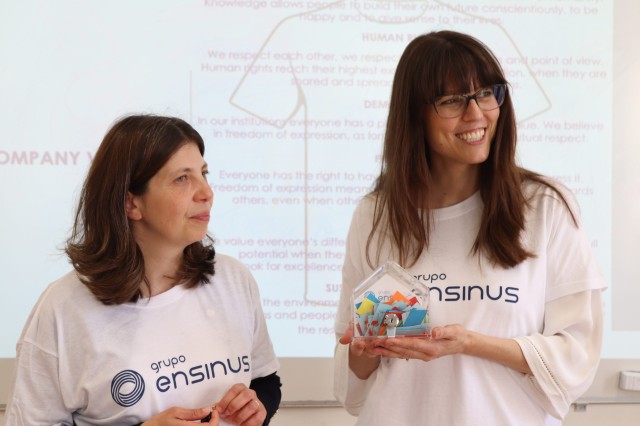
Structured workshops, co-design activities and experiential methodologies, including LEGO® SERIOUS PLAY® when appropriate, can help bring different perspectives to the surface and make interdependencies visible that might otherwise remain difficult to identify through formal discussions alone.
The value of these tools does not lie in the methodology itself, but in their ability to transform individual and functional knowledge into a shared organizational understanding.
This approach makes it possible to combine the rigor of Organizational Design with the active involvement of the people who will be responsible for putting changes into practice.
The objective is not to replace internal expertise with predefined solutions, but to support the organization in recognizing its challenges, leveraging available resources and developing decision-making mechanisms that are more closely aligned with its strategy.
An organizational solution becomes sustainable when it is built on a thorough understanding of the system and translated, together with the people involved, into responsibilities and operating practices that can genuinely be implemented.
The questions every executive should ask
To understand whether decision-making processes genuinely support organizational effectiveness, management can begin by considering several questions.
Executive checklist
- Are decisions made at the most appropriate organizational level, or do they frequently require intervention from senior leadership?
- Are roles, responsibilities and criteria for involvement in cross-functional decisions clearly defined?
- Do different functions share priorities and criteria for evaluating alternatives?
- Are the people involved in decision-making processes engaged in identifying challenges and potential solutions?
- Does management have the autonomy and capabilities required to take responsibility?
- Do we monitor the effectiveness of decision-making processes, or do we intervene only when delays and conflicts arise?
These questions make it possible to examine decision-making not simply as a sequence of approvals, but as a fundamental component of how the organization operates.
Decision-making effectiveness is an organizational capability
Decisions represent one of the main connections between strategy and the everyday functioning of a company.
Through decisions, resources are allocated, priorities are established, interdependencies are managed and objectives are translated into concrete actions.
When decision-making processes are ineffective, the consequences extend beyond delays and can affect collaboration, managerial autonomy and the organization’s ability to make full use of its existing expertise.
Improving decision-making therefore means building a system in which responsibilities, governance and behaviors are aligned, enabling people to contribute effectively to organizational results.
An organization becomes more effective not only when it makes decisions faster, but when it develops the capability to make appropriate decisions, share responsibilities and translate choices into action.
Do your organization’s decision-making processes genuinely support its strategy?
Slow decisions, unclear responsibilities and coordination difficulties can limit organizational effectiveness even when the necessary expertise is already available internally.
Quantasia supports business owners, executives and management teams in analyzing decision-making processes and identifying organizational challenges, directly involving people in developing practical solutions.
Through an approach that integrates strategic consulting, Organizational Design, facilitation and leadership development, Quantasia helps organizations strengthen autonomy, accountability and execution capability.
Contact Quantasia to explore how to make decision-making processes more effective and leverage the expertise already present within your company.